

CB1: Five Questions with Terrascend
Terrascend President & CEO, Ziad Ghanem offers his take.


On this round of our CB1 Capital Five Questions series, we are hosting Ziad Ghanem, President & CEO of Terrascend Corp.
Terrascend Corp is a US multi-state operator with assets in New Jersey, Pennsylvania, Maryland, Ohio, and Canada. The full video is below, along with each specific question clip and relevant transcript.
Full Video (← click here)

Question 1 - Pennsylvania Expansion
Josh - Ziad, you just pulled your first harvest from that (already operational) Pennsylvania cultivation facility.
I know it’s fully built. I know you’re just operationalizing rooms for the increased demand that you’re seeing.
Question is, you know, how much of that demand is from the Pennsylvania medical channel and how much of that expansion, preparing for future demand is that in preparation for the adult use channel?
Ziad - Look, the majority of what we’ve done in Pennsylvania is to support the demand in Pennsylvania.
Pennsylvania has been a very strong state for us.
We have 6 stores there.
We have five of our six stores that are ranked in the top 15 in the in the state.
We’ve seen revenue Increase with demand.
We’ve seen our market share increase over the last two years, in both retail and wholesale channel.
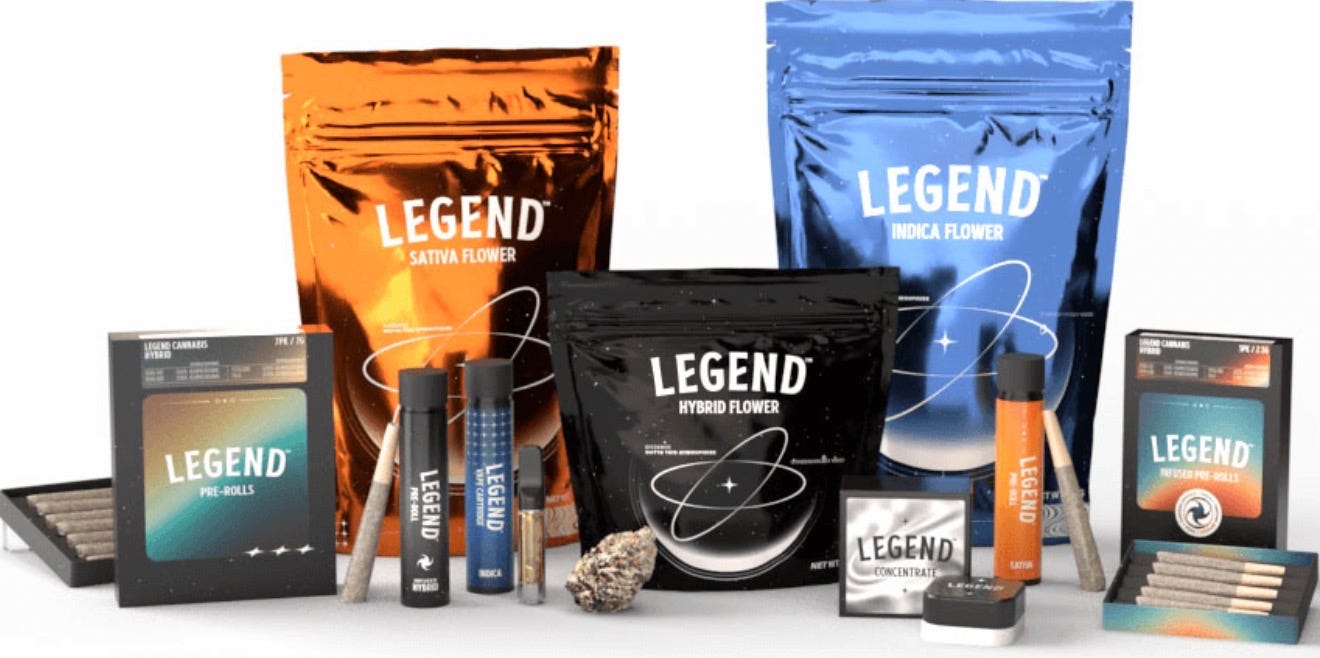
The team has done an outstanding job launching new product, creating new partnership with Tyson 2.0 and that has performed extremely well.
So the decision to bring more capacity online is really to support the demand that we are seeing in the business and that increase that I’ve seen that I’ve described.
We have a fully built in facility in Pennsylvania like you’ve mentioned and we have the ability to turn more rooms on.
And once the decision for adults-use to start in Pennsylvania, we will then add more rooms and be ready to support that growth.
It’s an important state for us.
It’s a huge facility for us.
It’s bigger than all our facilities combined, but the performance in Pennsylvania for the same stores, in a state that has done well from a medical perspective.
To see the increase in market share, to see increase in the demand has been remarkable.
Jason and I went to Pennsylvania a few weeks ago and went visited all our six stores.
The number one complaint that we heard from our employees is they cannot keep our own brands on the shelf.
And that’s one of the reasons that the high demand both in wholesale channel and other retail store and our stores for our product is what led us to make the decision to increase that capacity.
Josh - Got it, and appreciate that. Love what you’re hearing about your own brands within your own stores because, I know it’s not necessarily relevant, a lot of these markets are pretty nascent, but I think over time, quality and breadth of product portfolio is going to be what determines market share for a lot of operators.
You need to be able to pull people into your own stores when it gets very competitive.
And then on the wholesale front, you got to be what you know consumers are looking for.
Ziad - Just the consumer in our industry are becoming more and more sophisticated.
A few years ago, they were getting introduced to the product whether in any form factor, whether it’s a smokeable, whether it’s an edible, whether it’s etc..
Now there’s a higher expectation from our patients and from our customers.
So in the past you used to be able to acquire a patient or a customer and then you had to show that you can retain that customer and that patient.
And I think the team because of that quality, because a few things that we do extremely well, we’ve performed extremely well in acquiring new unique traffic, but then also maintaining that traffic and measuring their visits every 30, 60, 90 days and being in touch with them in an effective way that build a relationship and measure the value of that consumer not over one basket over lifetime.

Question 2 - Retail Share Leadership
Josh - So Ziad, you just noted and I think you noted in your Q1 earnings transcript, but five of your retail locations in Pennsylvania are among the top 15 stores in the state.
Your 3 New Jersey stores are gaining share and rank in the top 25.
And in Maryland, two of your stores rank in the top 10.
This is relatively consistent retail performance that we’ve seen for a long time.
So maybe it’s not necessarily a one-off factor of not having competition.
It seems to be consistent.
I’m just wondering what specific strategies are in place over at TerrAscend that contributes to this retail performance?
Ziad - Yeah, this is something we are super proud of.
The team has done an outstanding job getting us those results.
But I often say there’s no one magic bullet in retail that allows you to accomplish all this.
Usually you have to do few things well and all of them will come together to get those results.
Otherwise anybody will invest in that one capability, that one magic bullet to to get this accomplished.
But it starts with the the clone rule.
It starts with the care and the quality.
You know, every time I go to our cultivation facility, I’m, I continue to be impressed; first how clean, neat and organized, how consistent the work is, the strategy behind our strains.
And that starts from that clone rule and leads all the way to the final product that the patient and the consumer gets.
So quality is at the center of that efforts without quality.
You know, we’ve talked earlier about the consumer becoming more and more sophisticated.
Their their expectation is higher.
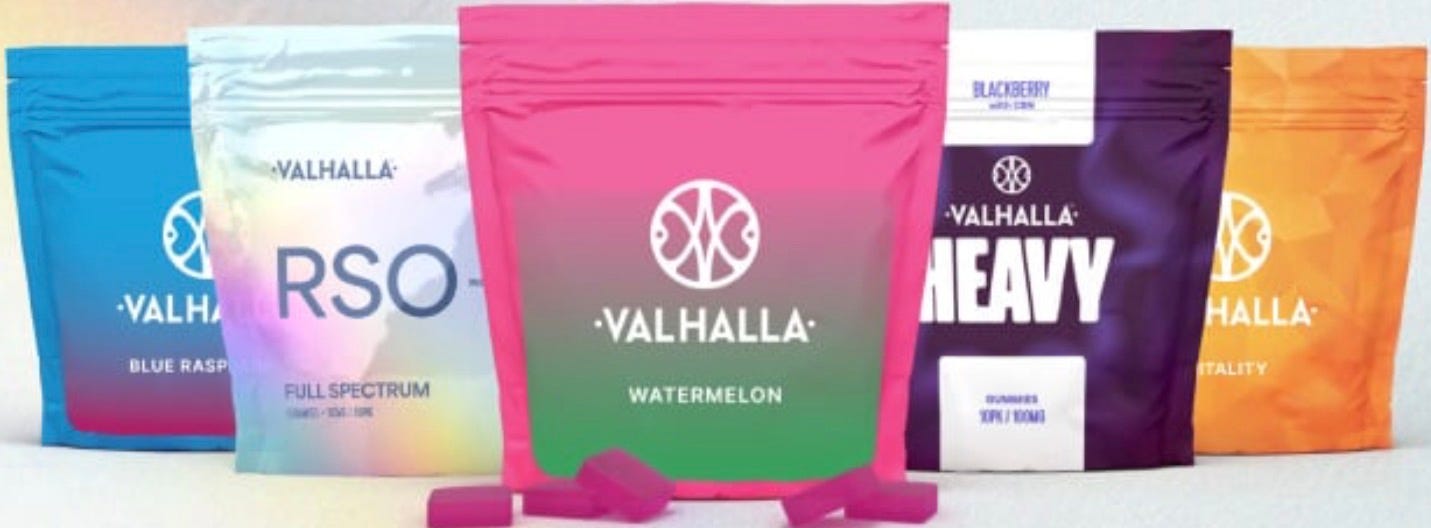
To win in this space and to continue to be consistent and to show the results we are showing in the states and the growth we are showing in Pennsylvania, etc. you have to anchor your strategy around quality, the product mix, the innovation and the new products that you are launching in order to maintain the interest of your consumer, in order not only to acquire the consumer but also to retain them.
Then also there’s the service in the stores, there’s the location in the store, there’s our budtenders being the ambassadors of our brands, all this work together very well in order to accomplish those results.
But also the segmentation and the way we communicate with our consumers.
We’re past the days of, you know, you do a one approach for everybody in every store.
Not every store is the same way.
A store in one area that does not have the same competition in another, like a store in another area, they don’t behave the same.
So therefore the approach is different and doing all this right is what’s resulting in the outcomes that we are seeing.
Josh - I’m sure consumers are are looking forward to, I think in your Q1 you also noted that you’re going to be releasing the most products ever in Q2 and Q3.
So I know that that consistency, that newness is, is a real center point to keeping those consumers coming into the shelf.
Ziad - And when we test those products before they hit the markets with our control group and with our employees, just the excitement and the reaction and the happiness that we are seeing just get us more and more excited to continue that effort and continue to focus on this area.
Because again, if you want to win in this space, you have to focus on this.
Question 3 - New Jersey Expansion
Josh - Ziad, in New Jersey, I know you recently added your second partner store.
You can still expand your social equity relationships up to seven in that state.
I know most MSO’s are focused on vertical revenue, vertical sales, as it should be.
I’m just wondering, you know, how many in network dispensaries can your Boonton facility in New Jersey supply?
Will you need to expand that once you start going beyond up to a certain retail door count?
Ziad - Yes, so in New Jersey, we started with three stores.
We have added Union Chill and then we recently announced Aunt Mary’s.
So we’re up to five and our intention and our focus is to continue to find the right assets to add to our stores and to get to the max.
So far, we have extended in a modular way Boonton to support those stores.
Verticality in New Jersey is somewhere around 60 to 70%.
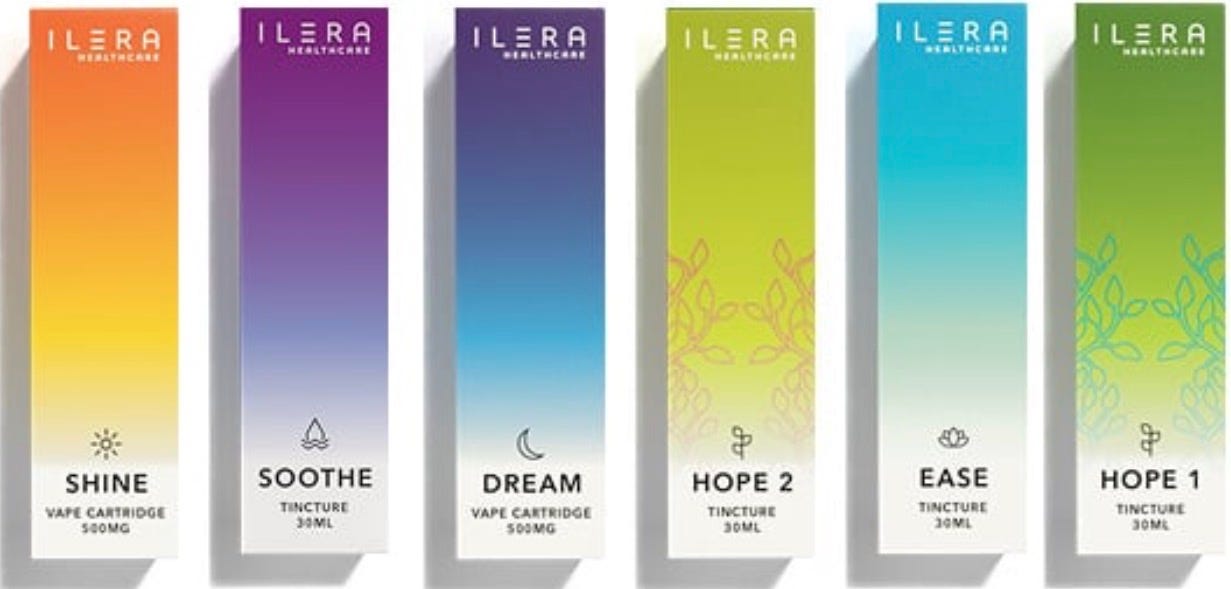
That’s the right mix where you can really compete with the retail stores that are in your trade area, but also have a good strong showing of the products that we are so proud of.
We are doing expansion in Boonton to support additional stores, but Boonton itself will be able to support our max stores and we have done some of that expansion.
Josh - And then as far as the wholesale channel, do you have any idea once you expand up to the full size of that facility, you know what percentage may be parsed out for wholesale, what percentage may be parsed out for retail?
Ziad - You know, wholesale, I mean as we add more stores, we’re seeing, we’re selling more of our finished goods to our stores.
Wholesale is now pure finished good wholesale.
There’s no bulk wholesale.
We had the ability in the past to sell bulk wholesale because the demand for the count of stores was not as high.
But now with more wholesale accounts opening, more of our stores opening that makes around 70/30.
And while we’re increasing the market share in our store with additional stores, so as wholesale market share as well, we continue to be in the majority of the doors.
We continue to see the same interest in our product that we are seeing with our consumers and our store.
So that is 70/30 mix that we are seeing similar to what it what it is nationally.
Question 4 - M&A Pricing Environment
Josh - That Aunt Mary’s acquisition, I think it was a $10 million revenue acquired at $9 million, so 0.9x sales.
Your previous store Union Chill announced I think May of ‘25 was a similar multiple on sales.
So I’m just wondering, is that indicative of a now stable pricing environment in New Jersey?
Or is there maybe a specific factor with one dispensary or another that created the certain multiple, maybe Aunt Mary’s is a very high valued store and that’s why that multiple is consistent, whereas Union Chill might be a cheaper multiple today.
Can you just give an update on how multiples are looking in the markets these days?
Ziad - Yeah, there are a few filters that we put when we are thinking of acquiring new acquisition or new store or going deeper like for example in New Jersey.
So we look at tier one stores, we look at stores that are 10 million or more in revenue.
We look at stores that are in areas that are protected.
We look in stores that have a culture that fit within our culture.
We look at stores that, we look at deals that are accretive to us when you look at their EBITDA versus their revenue.
So I would say, what you described is accurate, that’s what worked for us.
That’s what those are the deals that we are seeing and it’s that that same zip code around close to one time revenue is what we are seeing.
Now, there are some dispensaries and some businesses that they think so highly of their babies, they’re still attached emotionally their babies and they think it’s worth a lot more and they’re pricing it at a higher price.
But those are not deals that we can do today.
We’re focused, we’re disciplined.
We’ll make the right deal at the right price with the right fit for us.
Josh - You noted that you know, when you acquire these facilities, there’s still a lot of improvement you can make in terms of efficiency, in terms of vertical integration.
So I understand that that might be 0.9x sales.
But I’m interested in what maybe the 4-wall EBITDA margin was before and after you acquire.
Can you take it maybe from a a 10% EBITDA margin to a 25% EBITDA margin? Because that would obviously speak a lot more than that sales multiple.
Ziad - Yeah, look EBITDA margin definitely improves and there’s a lot of synergy that happens when we acquire those stores, especially around verticality.
And in some cases, you do see 10/15/20 percent improvement in EBITDA margins.
Question 5 - Rationality in M&A
Josh - I know M&A is obviously a big part of your forward strategy.
And I know that you’ve, you know, you were initially criticized for it.
And now people give you a lot of credit for having patience as a lot of maybe previous M&A might have been destructive M&A considering price compression factors.
But do you think that we are now living in a world where people are more rationally viewing the value of their business and how far do you think we’ve come over the last maybe two years and people understanding that, or becoming rational?
Ziad - It’s a mixed bag.
I think we did, we did travel a long way and I think we’re seeing a lot of operators that are really looking at the right valuation and are losing the the disconnection or are divorcing the idea that their business was worth two or three times what it is today.
So we’re seeing a lot of those, but we still see some that are still resistant.
We still see some that think that they can get more for their businesses, but that’s not the reality.
So, I would say in the majority of the cases we are seeing that alignment around EBITDA multiple and revenue multiples and it’s starting to collapse and become narrower and narrower across state lines.
/end
If you’d like to help Mission [Green] change federal cannabis policies, please click here.
CB1 has a position/ is an advisor to TerrAscend and nothing herein should be considered advice.