

Legal Cannabis Doesn’t Create Demand. It Converts It.
The price compression crisis is real. The answer isn’t more promotion, and it isn’t a better-behaved regulator. It’s a cost structure built to convert demand that already exists.


MJBizDaily just asked the right question: “The cannabis industry is having a price compression crisis. What’s the solution?”1
Under that headline sits the most important statistic this industry has produced:
U.S. sales fell year over year for the first time on record, $32 billion down to $29.94 billion, while consumers bought more product than ever.1
Volume up. Revenue down. Demand did not weaken. Price did.
That single fact ends the argument that cannabis has a demand problem.
People want the product. They are buying more of it. They are paying less for it.
The article makes that case well, and then it stops, because the price problem is where the commentary always stops.
But under the price problem is a cost problem, and under the cost problem is a discipline problem, and those two are where the money is.
I’ll take them in order.
The right diagnosis

The diagnosis is correct, and I won’t relitigate it.
Regulators licensed cultivation against political goals: tax receipts, municipal fees, job announcements. They did not license it against demand.
Beau Whitney calls it regulatory malfeasance, and he isn’t wrong. Licensed capacity already exceeds in-state demand in most states, and oversupply compresses price.1
The state numbers prove it. Where supply is constrained, the average item rings up around $27 in Missouri and $30 in New Jersey. In Michigan, where supply is wide open, it rings up at $9.2 All of that is true.
My quarrel is with the prescription.
The wrong prescription, twice
The article offers two answers, and both are the wrong tool for the person who has to make payroll.
The first is aimed at regulators: pause licensing, force consolidation, reform the access model. The article concedes that a regulator’s job is not to guarantee every operator succeeds, then keeps the regulator at the center of the fix anyway.
Some of those reforms may even be good ideas. Not one of them is available to you, and you cannot run a company on what a regulator should do.
I spent 40 years in steel and distribution and watched operators wait for Washington, the mills, or the market to fix what was killing them. The ones who waited didn’t make it. The regulator problem is real the way the weather is real.
You plan around it. You don’t petition it.
The second is aimed at operators.
The article says the industry cannot promote its way out of this problem, then hands operators the promoter’s toolkit anyway: the Four Ps, grow the category, bring new consumers in.
That is demand-creation thinking, and demand creation is for products that need demand created. Red Bull had to build the energy-drink occasion out of nothing. Cannabis is the opposite case.
The product is older than recorded history, and the customers are not hypothetical: better than sixty million Americans used cannabis in the past year, by the federal government’s own count3, and a large share of them bought it outside the legal system.
The demand is already out there. It is just being rung up at somebody else’s register, or no register at all. You don’t create demand in this business. You take a purchase that was already going to happen and convert it into your sale, at your price, in your store.
Demand is a conversion function
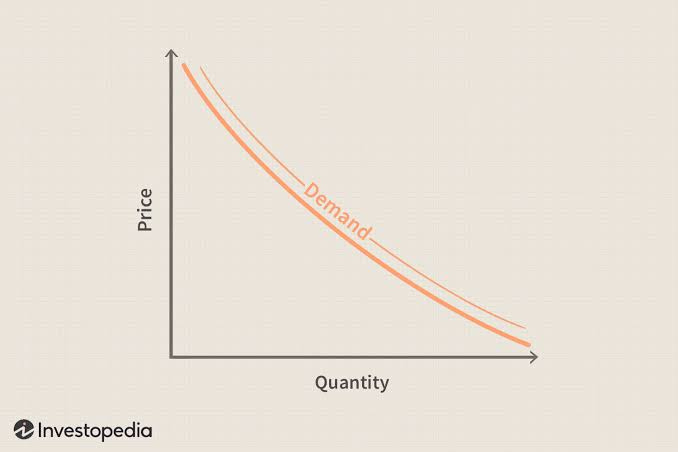
Once you see it that way, the strategy question gets simple.
Every legal dollar this industry will ever record is a converted dollar, and there are exactly three customers it can come from.
The customer already in your store, whom price converts into a bigger basket and a return trip. The customer still buying illicit, whom price converts by closing the gap with the street. And the customer in your competitor’s store, whom price converts the day your shelf beats theirs. Three customers. One lever.
The objection I always hear is that quality, testing, and safety must count for something. They do, and legal retail already wins on all of them: tested product, honest labels, a safe store.
The customer still buying from his guy knows all of that. He stays for the price.

Michigan ran the experiment
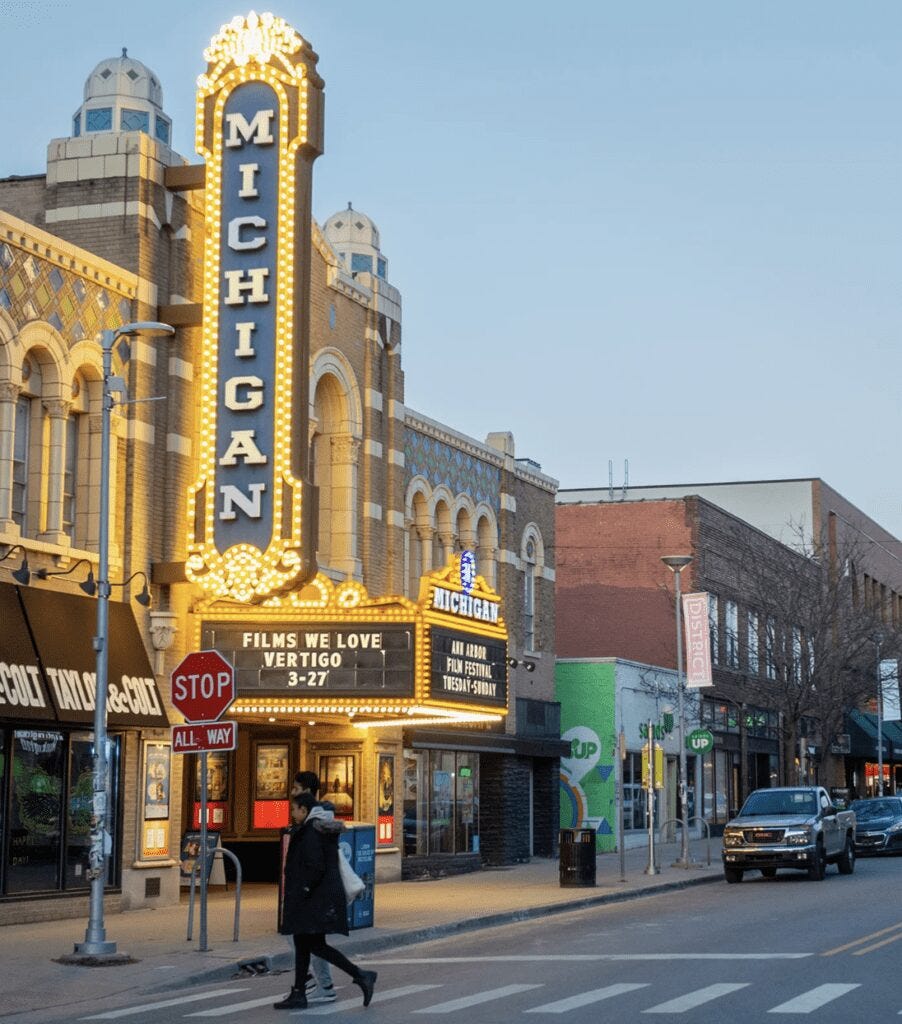
If that sounds like theory, Michigan already ran it at state scale.
In 2025, Michigan sold 348 million cannabis items, up from 291 million the year before. Fifty-seven million more units in one year, in a state of ten million people, while revenue fell.2
That is conversion, and much of it was not even Michigan’s own demand. Michigan built the cheapest legal gram in the country and pulled customers across its borders from Ohio, Indiana, Illinois, and Wisconsin, states that were either prohibition markets or taxed so heavily that the drive north paid for itself.
The border numbers tell it. Michigan’s interior stores average a little over ten thousand dollars a day; its border towns run roughly three times that.
New Buffalo, on the Indiana and Illinois line, and Monroe, on the Ohio line, sell flower near three dollars a gram against roughly six in Illinois and seven in Ohio. Half price, before tax.4
At the peak, out-of-state buyers were about half the customers and up to seventy percent of sales at the Monroe-area shops.5 Missouri runs the same play out of Kansas City, where seven of its eight neighbors have no adult-use market.6
That is a price-driven consumer voting with a tank of gas.
But borrowed demand comes due. The cross-border premium lasts exactly as long as your neighbor’s prohibition. Ohio opened adult-use in 2024, the gap began to close, and those buyers stayed home.
A ballot initiative one state over erased a piece of Michigan’s top line overnight. And this is where the story connects back to the article: the operators handing licenses back in Michigan today are, in large part, the ones who converted on price without building a cost structure that could survive the price they converted at. Michigan is a cautionary tale about conversion without cost discipline, not about conversion.
That is the whole game, and it comes down to one line:
Conversion is won on price. Price is survivable only on cost. And cost lives in two places: the grow and the balance sheet.
The cost of a gram
A gram has a cost to produce, and most of that cost is fixed. Electricity for the lights and the air. Labor to tend, harvest, and trim. Rent and depreciation on a purpose-built facility. Testing on every batch. None of it falls when the wholesale price falls. The market can cut your selling price thirty percent overnight.
Your power bill does not get the memo.
So when a market oversupplies, the grower with a high fixed cost per gram bleeds first, and no promotion saves him. The Four Ps cannot outrun a utility invoice. You cannot advertise your way out of negative unit economics. You can only sell more units at a loss, faster.
The article sees this coming and stops one step short. There is only so much cost an operator can remove, it says. True, as far as it goes. You can only cut so much labor and renegotiate so many leases before you are cutting quality and service. But that assumes cost per gram comes down one way, by removing spend.
The bigger lever runs the other direction: more grams out of the spend you already carry. More yield from the same room. More output per square foot, per labor hour, per kilowatt-hour. Every point of yield spreads the same fixed cost across more product and pushes the cost per gram down.
That is an operations project: genetics, plant health, environmental control, clean harvest and post-harvest execution, compounded room by room over years.
Most operators underinvest in it because it doesn’t photograph well and it doesn’t make a press release. But every extra gram off the same fixed-cost base is a gram you can price to convert a customer and still make money on.
The balance sheet is a fixed cost, too
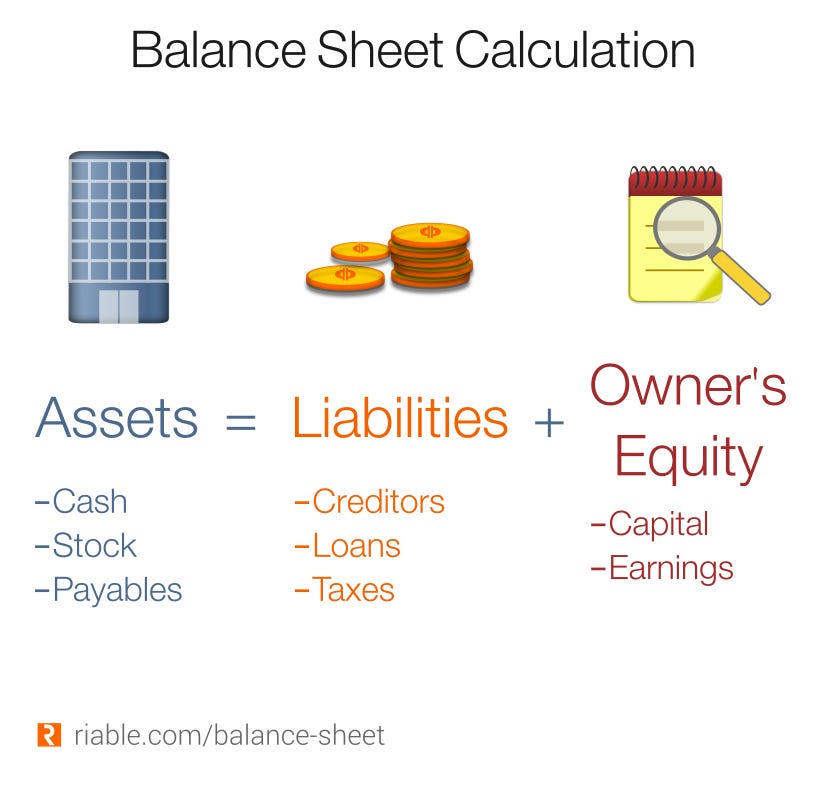
The second fixed cost is the one this conversation ignores, and it is the one that finishes companies off in a declining market: the cost of the capital, and the form it took.
Much of this industry was built on other people’s money at the top of the cycle.
Expensive private debt once the equity dried up. And, worse, sale-leasebacks on the grows and the stores: sell a building you own, rent it back on a long triple-net lease with annual escalators.
It looks like a financing win the day you sign it. What you have actually done is trade a flexible owned asset for above-market rent locked in at peak valuations, and in this industry a lot of those leases were signed at the very top. Rent that rises every year, in a business whose prices fall every year.
That is the capital-structure version of the high-cost grow, with one difference that makes it worse. The grower can work his way to more grams. The rent is fixed in a contract, and no amount of yield renegotiates it. In a deflating commodity, an above-market cost of capital is as fatal as an above-market cost of production, and billions of dollars of that debt come due over the next two years.7
Owning your real estate and financing it conservatively is not a balance-sheet nicety. It is the cost-per-gram discipline applied to the other side of the ledger.
And this is not a one-time mistake the industry is working off. It is a reflex. Every time a new state opens or a federal change looks imminent (rescheduling, banking reform, whatever the catalyst of the year is), the same two things happen at once.
Supply expands, because everyone builds against the demand they are certain is coming. And the building is funded with expensive capital, because cannabis capital is always expensive: federal illegality keeps the banks out, Section 280E taxes gross profit, and the money that fills the gap prices itself accordingly.
For years, growth in each new state papered over the declines in the last one. The article’s own economist just told you the legal markets are tapped out.1
The map has run out. Treat the next “inevitable” surge as a reason to build and borrow, and you have volunteered for the next turn of the cycle.
When you can’t win the cost game, buy
There is another move, and it is the counterintuitive one. Sometimes the market will sell you a finished gram for less than it costs you to grow one. The disciplined answer is to stop growing and buy.
We just did it. We built our Arizona operation expecting compression and kept the footprint flexible on purpose. The market went deeper than even we planned for, so we did not stand on flexibility.
We shut our cultivation facility in Eloy, put the building up for sale, pointed the proceeds at debt, and moved the equipment to Ohio, where it can earn. Our Arizona stores now buy from the same glut everyone else is lamenting.
The numbers are not close. In late June, the U.S. wholesale spot price for flower was about $997 a pound, roughly $2.20 a gram.8 Arizona trades well under that: the state’s wholesale price is the lowest since tracking began in 2015, with indoor and greenhouse flower at all-time lows, down about 22 percent since late 2025.9
Set that against what it costs to make. Independent estimates put an indoor pound anywhere from a few hundred dollars for the most efficient growers to about a thousand for everyone else, and even best-in-class operators have reported cash costs near a dollar a gram.10
And cash cost is the flattering number. It is what the next pound costs before you absorb the building, the equipment, the depreciation, and the capital behind them.
All-in, the real number is higher, often much higher. So Arizona wholesale is not merely brushing the best growers’ cash cost. It is under the all-in cost that almost anyone actually carries.
Growing to sell into that is manufacturing a loss and booking it as revenue.
So the rule is simple. Make when making is cheaper. Buy when buying is cheaper. The test is cost, every time, and the objective never changes: land your cost per gram low enough to lead on price and still earn a margin.
A glut is a catastrophe when you are selling into it. It is a discount when you are buying from it.
Why you need the door
The difference between those two positions is retail.
The wholesaler selling his own grow into oversupply is playing for cash recovery: getting something back against money already spent, and at today’s prices, not all of it.
The operator who controls the shelf is playing for margin: buy the distressed pound below anyone’s all-in cost, sell it at retail, and the spread is real profit rather than a partial refund.
The licensed door is what turns oversupply from something you survive into something you capture.
The door is also what makes make-versus-buy a decision instead of an observation.
Knowing the market will sell you a gram below the cost to grow it is worth nothing if you have nowhere to sell it. The shelf lets you set the price that converts, size your cultivation to your own demand instead of to wholesale hope, and choose, pound by pound, what to make and what to buy.
Without the door, you take whatever the wholesale market will bear. With it, you decide.
The objection worth taking seriously is that the door is also a ceiling: the dispensary-only model caps how many consumers the legal market reaches, and the casual buyer who will not walk into a dispensary, out of stigma, hassle, or plain habit, keeps buying wherever he buys now.
Fair. But that is an argument about the size of the pie, not about who eats, and on cost it cuts one way. If access widens through delivery, hospitality, or new formats, cannabis becomes more of a commodity, not less, and price compresses further.
A wider door does not rescue a broken cost structure. It exposes it faster. Narrow or wide, the same discipline decides who is standing.
On “bringing more consumers into the category”
The article ends in the right place: the one thing that creates sustainable growth is bringing more consumers into the legal category. Agreed. Now finish the thought.
The consumers still outside the legal market are overwhelmingly buying illicit, and they buy illicit because it is cheaper.
Notice what the illicit market spends on marketing: nothing. No ads, no loyalty program, no rebrand. It competes on price and convenience, and it has been beating licensed operators on both for years. That is your competitor for the unconverted consumer.
You do not out-promote a price competitor. You out-cost him.
Hemp-derived THC is the same competitor with a checkout counter. It undercuts licensed product because it skips most of the regulatory cost: the licensing, much of the testing, the cannabis tax stack.
The industry’s response has been to ask legislatures to shut it down, and maybe someday they will. Your price war is this quarter. You beat hemp the same way you beat the street, with a cost structure that lets your shelf price compete.
Growing the category and converting the price-driven consumer are not two strategies. They are one.
The set-aside that isn’t coming
One more thing makes this glut different from every other one in U.S agriculture, and it matters for what comes next.
Commodities oversupply all the time. Corn, soybeans, milk, hogs. When they do, Washington puts a floor under the price: reference prices and marketing loans, subsidized crop insurance, and when prices collapse anyway, direct payments, as recently as last December.11
It has paid farmers to idle acreage, and the surplus can be exported. And it is not only agriculture. When imports threatened to swamp domestic steel, Washington answered with tariffs and quotas.
Cannabis gets neither the floor nor the fence. A legal pound cannot cross a state line, so every state oversupplies itself behind a wall that keeps the surplus in and the protection out. No price support, no crop insurance, no export, no tariff, and Section 280E on top.
It is the only major cash crop in America expected to face oversupply with every safety net deliberately removed. The same government that licensed the oversupply offers no floor when it craters.
So the supply rationalization Washington performs for the soybean farmer, cannabis has to perform for itself, and the mechanism is consolidation.
That is what this shakeout actually is: the market carrying out the set-aside the government won’t. Done right, M&A idles redundant cultivation, matches combined supply to real retail demand, and strips out duplicated overhead.
But turning two wounded operators into one healthy company is a specific and scarce skill. It means knowing which assets to keep and which to shut. It means integrating cultivation, retail, and back office without breaking either business. It means running the combined footprint at a cost neither company could reach alone.
This industry was built by people who could raise money and build brands. The next phase belongs to a different resume: people who have shut plants, merged overlapping operations, and run the survivor lean, because they have done it before.
That was my work for the better part of four decades. I was on the operating side of exactly this kind of consolidation across more than one cycle: absorbing acquired divisions, closing redundant capacity, integrating the back offices, running the combination lean.
Nobody put a floor under us either. The low-cost operators bought the assets of the high-cost ones, and the companies left standing were the ones that could actually run what they bought. The product changes. The math does not.
The Monday morning question
The demand is already there, sixty million buyers strong, and rising unit volume proves they are not leaving. What is missing, at most operators, is a cost structure that can convert that demand at a profit.
So skip the marketing meeting and ask the Monday morning question instead: what does my gram cost, all-in, rent and debt included, and how do I get that number low enough to lead my market on price and still make money?
Answer it honestly, and the demand takes care of itself.
No regulator, no rescheduling, and no billboard is going to answer it for you.
This is Third-Party content and does not reflect (or not not reflect) the views of Cannabis Confidential or CB1 Capital.
Eric Offenberger is the Chief Executive Officer of Vext Science, Inc. and its operating subsidiary Herbal Wellness Center, a multi-state cannabis operator with licensed retail dispensaries and vertically integrated manufacturing operations in Arizona and Ohio. Prior to entering the cannabis industry in 2018, Eric served as President and Chief Operating Officer of Delta Steel, a Reliance, Inc. (formerly Reliance Steel & Aluminum Co.) company, where he provided strategic oversight for six divisions across the distribution and manufacturing sectors. He is a Certified Public Accountant (CPA) (Inactive) and brings over 40 years of experience in operations, finance, and executive leadership across the commodity, distribution, and consumer goods industries.
The views expressed in this article are those of the author in his personal capacity and are provided for informational and educational purposes only, based on publicly available market data and his industry experience. They do not constitute investment advice, a solicitation to buy or sell securities, or an offer of any kind. Nothing in this article should be construed as a representation or warranty regarding the future financial performance of Vext Science, Inc. or any other company mentioned or implied herein. Certain statements in this article reflect views about future industry dynamics and competitive outcomes and may constitute forward-looking information within the meaning of applicable Canadian securities laws. Actual outcomes may differ materially from those expressed or implied, as a result of changes in market conditions, regulatory frameworks, or other factors. This article does not constitute a formal disclosure document of Vext Science, Inc. Investors are encouraged to review the Company’s continuous disclosure record on SEDAR+ at www.sedarplus.ca before making any investment decision.
Sources
1. U.S. cannabis sales fell from $32.0 billion (2024) to $29.94 billion (2025), the first year-over-year decline on record, with unit volume rising; “regulatory malfeasance” attributed to economist Beau Whitney; “the legal markets are tapped out” (Whitney). MJBizDaily, Margaret Jackson, “The cannabis industry is having a price compression crisis. What’s the solution?”, July 27, 2026.
2. Average item price by state (Michigan ~$9, Missouri ~$27, New Jersey ~$30) and Michigan unit volume of 348 million items in 2025, up from 291 million in 2024, on revenue declining from $3.38 billion to $3.17 billion. MJBizDaily, Margaret Jackson, July 27, 2026 (same article).
3. More than 60 million past-year cannabis users in the United States (22.3% of Americans 12 and older). U.S. Substance Abuse and Mental Health Services Administration (SAMHSA), 2024 National Survey on Drug Use and Health (NSDUH).
4. Michigan interior/statewide store velocity (~$10,300 per store per day, FY2025; $9,800, Q1 2026) versus border towns at nearly 3× (Monroe ~$34,500/$30,000; New Buffalo ~$31,700/$27,800), and flower average retail price per gram (New Buffalo $3.19/$3.09, Monroe $2.96/$2.67; Illinois $6.11/$5.47; Ohio $7.10/$6.63). BDSA, “Michigan Border Stores and The Cross-State Cannabis Boom,” April 3, 2026.
5. At the 2024 peak (prior to Ohio’s August 2024 adult-use launch), out-of-state buyers accounted for roughly 50% of customers and up to 70% of sales at Monroe-area dispensaries. Bridge Michigan, “Ohio helps make Michigan No. 1 in weed sales — but perhaps not for long,” June 19, 2024.
6. Seven of the eight states bordering Missouri have no legal adult-use market, positioning Missouri (and Kansas City in particular) as a regional cross-border supplier. Headset, “Geographical Insights into Missouri’s Thriving Cannabis Market,” May 2024.
7. U.S. cannabis operators carry billions of dollars of debt, with maturities concentrated in 2026–2027; the first half of 2026 was dominated by refinancing activity as operators termed out that obligation. Sources: Viridian Capital Advisors, First Half 2026 Cannabis Deal Tracker; industry reporting.
8. U.S. wholesale flower spot price of approximately $997 per pound (about $2.20 per gram) in late June 2026. Cannabis Benchmarks, U.S. Cannabis Spot Index, June 26, 2026.
9. Arizona’s wholesale flower at its lowest level since Cannabis Benchmarks began tracking the state in October 2015, with indoor and greenhouse flower at all-time lows and the state index down approximately 22% since late 2025; Arizona is among the lowest-priced wholesale markets in the country. Cannabis Benchmarks, U.S. Cannabis Spot Index and Wholesale Market Observer, May 2026.
10. Indoor cannabis production cost estimated at roughly $150 per pound for the most efficient operations up to about $1,000 per pound for less efficient ones (Next Big Crop, “Commercial Cannabis Production Costs”); best-in-class indoor cash cost reported below US$1 per gram (~US$368 per pound) (Grown Rogue Inc. news release, June 9, 2020). Cash cost excludes absorbed fixed costs (facility depreciation, overhead, and capital), so fully-absorbed, all-in cost is higher.
11. Federal support for agricultural commodities includes Price Loss Coverage reference prices and marketing-assistance loans that function as a price floor, subsidized federal crop insurance, historical acreage set-aside/idling programs, and ad-hoc direct payments during market disruptions (e.g., USDA’s December 2025 market-disruption payments to farmers). Sources: U.S. Department of Agriculture; American Farm Bureau Federation.
 | A guest post by
|