

Recipe for a Rally
U.S canna simmers under the surface.


Recent Recap
Turnaround Tuesday arrived as the second half of 2026 officially kicks off. ⚽
After the sector saw strength in the last four sessions of the second quarter, the first three sessions of Q3 unwound those gains despite the continued progress through a complicated federal normalization process to further unlock the plant.
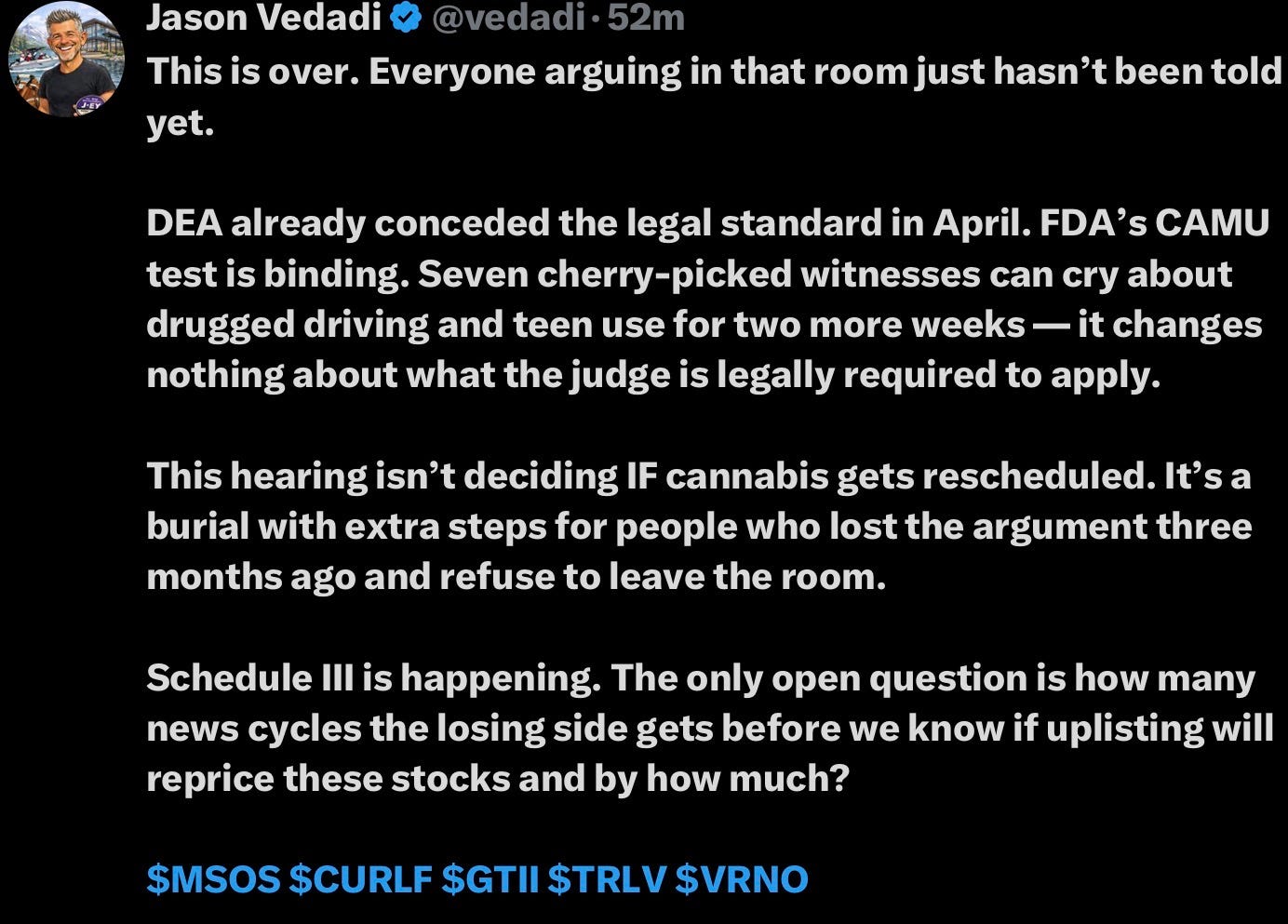
The ALJ AU hearings continue apace, with yesterday highlighting the Department of Justice’s legal strategy.
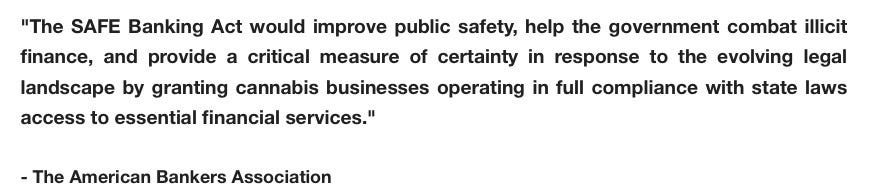
Meanwhile, there were fresh reports on SAFE banking…
According to the senior advisor, Trump views SAFE Banking as one piece of a broader federal marijuana strategy that also includes rescheduling, along with the creation of a commission to study removing canna from the federal list of controlled substances.
The advisor said Trump believes the combination of rescheduling, marijuana banking reform and a descheduling commission (expected to be announced in August) could help win over voters and maintain and potentially even increase support from the cannabis industry heading into the midterm elections.
…that jibes with everything we’ve been hearing and discussing all year: that promises made will be promises kept into the midterms, particularly with the youth vote up for grabs and Bitcoin down ~40% vs. inauguration day.
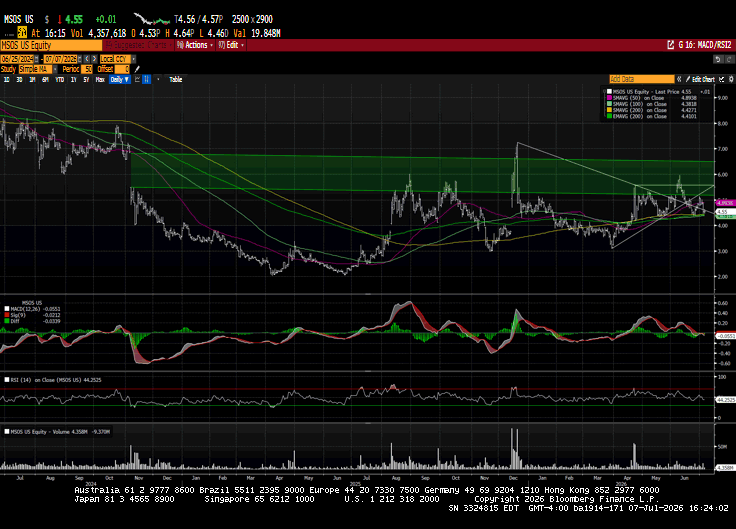
Following Monday’s 7% decline, U.S. cannabis ETF MSOS once again tested it’s 200-day, which was a persistent theme in Q226, as patience continues to thin and nerves remain frayed. The ETF is -3.5% YTD with uber-thin volume as D.C. does it’s thing.
Recipe for a Rally
1. Growth, catalyzed by the hemp ban.
The federal redefinition of hemp enacted last Nov. takes full effect this Nov.
In the meantime, states are moving on their own to push intoxicating hemp products, or the THCA and Delta-8 goods that quietly cannibalized licensed dispensary sales for years, either out of unregulated retail entirely or into the licensed channel.
Ohio’s is the clearest example: alongside its rollback provisions, it banned intoxicating hemp sales outside licensed cannabis retailers, and Ohio’s adult-use sales responded with roughly 22% year-over-year growth in May.
2. Regulatory parity.
Rescheduling is necessary but not sufficient to normalize the industry’s relationship with capital markets, although the uplistings demonstrate genuine real-time progress.
Banking and payments remain the laggard: rescheduling does not by itself satisfy card network rules or bank BSA/AML obligations, and major card-issuing banks will need their own rule changes (←paired with SAFER Banking, which POTUS recently pushed).
We are watching ACH and bank-to-bank payment adoption as the pragmatic bridge. That channel is projected to carry 42% of canna transaction volume in 2026, up from 28% a year ago, and is a solid step away from cash-intensive operations.
Full parity across the board will require federal guidance, which is forthcoming.
3. Tax clarity.
Under Treasury’s transition rule, Section 280E relief for state-licensed MMJ operators applies to the entire 2026 tax year, not just from the April 22 effective date forward, which is a meaningful administrative gift and perhaps the first shoe.
The open question is retroactivity as the April order “encourages” Treasury to consider relief for prior years. Publicly disclosed 280E liabilities across the industry are ~$1.6B (~$15B since 2018), while the IRS continues to argue in active Tax Court litigation that past-year 280E liability stands regardless of rescheduling.
I sorta look at “280E” as a modern day sector-specific version of FASB 157 which, for the kids out there, halted the Great Financial Crisis right at Satan’s door of S&P 666.
You didn’t know what it was unless you were looking for it then, but that is what our space is hoping for now. That would invert a lot of these balance sheets and make this long-forgotten sector spicy—and entirely more investable.
Top Stories
President Urges Senate Majority Leader Thune to Hold Vote on SAFE Banking
First World Cup with Legal Cannabis is a Major Opportunity for Sales
U.N. Drug Report Highlights How Ineffective Cannabis Prohibition Is
A Major Cannabis Growth Opportunity May Already Be On The Shelves
FDA Approved Cannabis: Why Schedule 3 Means Operators Must Prepare For Pharmaceutical-Grade MMJ Now
Massachusetts Canna Sales Top $800M In ‘26, Generating $125M In Tax Revenue
‘Doing Nothing Was Not An Option’: NC Senate Votes To Crack Down On Hemp
What The Federal Hemp Ban Will Do
China Invests $10 Million In Medical Cannabis In Lebanon
Industry Headlines
Inside LEEF Brands’ Massive Outdoor Grow | Trade to Black
Glass House Brands Completes First International Hemp Sale
AlphaNooner - BRC Therapeutics CEO George Hodgin on Cannabinoid Innovation

CGF on Trulieve
One of the more interesting topics that came out of our recent marketing with Trulieve was the size of the organic growth opportunity available to the company in Texas.
Importantly, the market structure looks and feels similar to what is currently in place in Florida, Trulieve’s home market, where it has maintained a dominant market share since program inception, and which we estimate makes up the vast majority of the company’s medical-use business.
We are reiterating our BUY recommendation and US$20.00 target
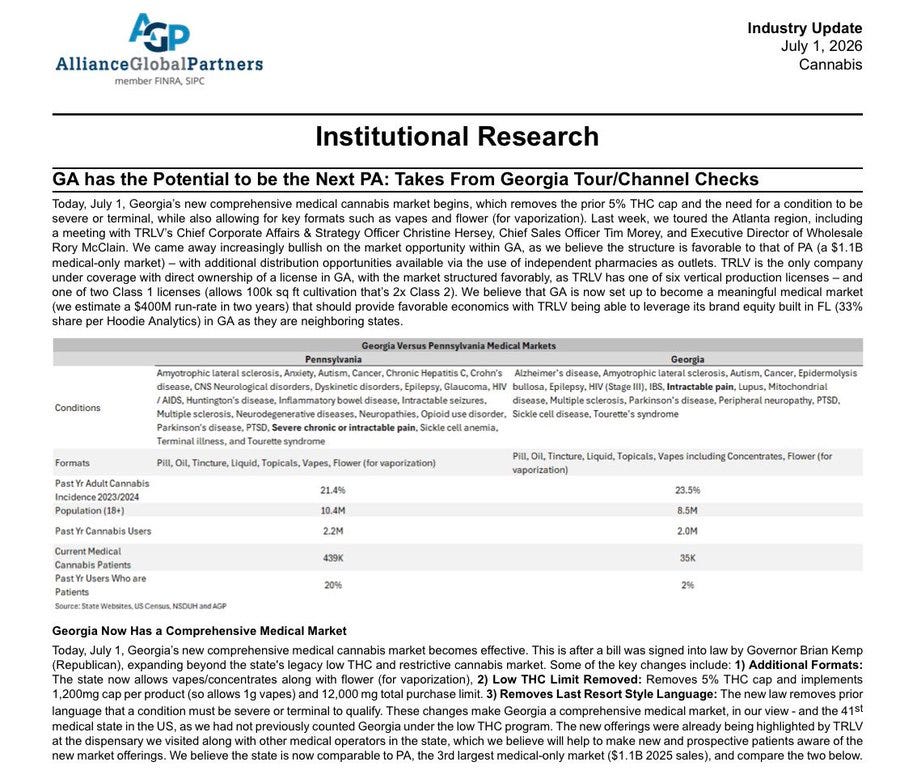
AGP: GA has Potential to be Next PA: Takes From Georgia Tour
Georgia’s new comprehensive medical cannabis market began July 1, which removes the prior 5% THC cap and the need for a condition to be severe or terminal, while also allowing for key formats such as vapes and flower (for vaporization).
Last week, we toured the Atlanta region, including a meeting with TRLV execs. We came away increasingly bullish on the market opportunity within GA, as we believe the structure is favorable to that of PA (a $1.1B medical-only market), with additional distribution opportunities available via the use of independent pharmacies as outlets.
TRLV is the only company under coverage with direct ownership of a license in GA, with the market structured favorably, as TRLV has one of six vertical production licenses and one of two Class 1 licenses (allows 100k sq ft cultivation that’s 2x Class 2).
We believe that GA is now set up to become a meaningful medical market (we estimate a $400M run-rate in two years) that should provide favorable economics with TRLV being able to leverage its brand equity built in FL (33% share per Hoodie) in GA as they’re neighboring states.
Stems & Seeds

The History of Cannabis Legalization in the United States

Thank You Trulieve!

Have a safe journey, please enjoy responsibly.
If you’d like to help Mission [Green] change federal cannabis policies, please click here.
CB1 has positions in/ advises some of the companies mentioned and nothing contained herein should be considered advice.
how does OMB officially asking for delay on Hemp Ban come November factor into your thinking?
https://www.cannabisbusinesstimes.com/hemp/news/15828617/white-house-asks-congress-to-revise-hemp-definition-delay-thc-product-ban